
History
History of the Gdynia Cotton Association
The idea of establishing an institution that would protect the interests of Polish cotton merchants, advance the trade and processing of cotton, and support the development of cotton-based products emerged in 1934. Its originators were textile industry entrepreneurs, representatives of local and central administration, and business leaders engaged in the business of Poland’s rapidly growing textile sector.
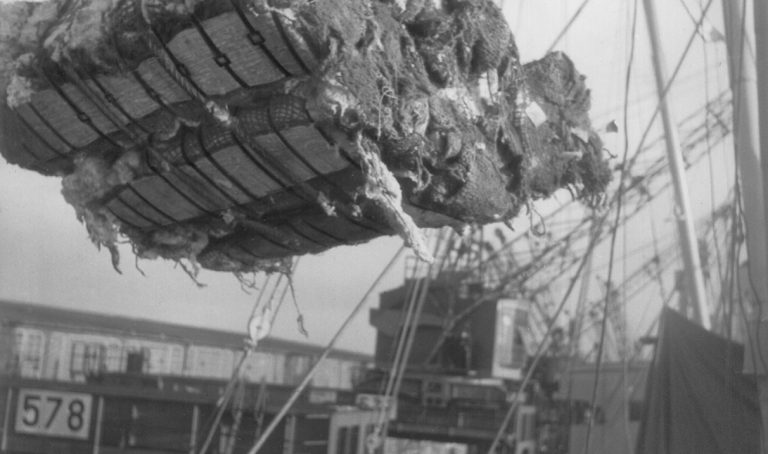
At that time, the Port of Gdynia was expanding dynamically, handling large volumes of raw cotton destined for Polish mills. The desire to secure independence from the influential cotton trading centres and merchant lobbies concentrated in Western Europe made Gdynia the perfect location for an institution that would supervise transportation, storage, logistics, and—most importantly—provide independent quality control of cotton.
On 26 March 1935, a decision was made to establish the Association of Cotton Trade Stakeholders – The Gdynia Cotton Association, and the first General Assembly was held on 2 June 1936, in Łódź.
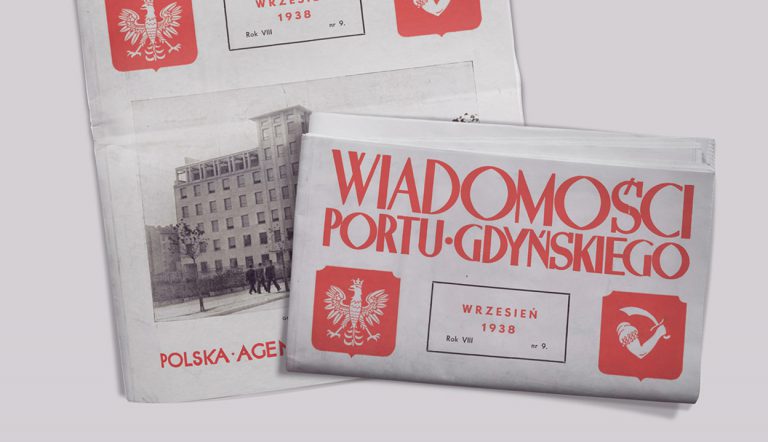
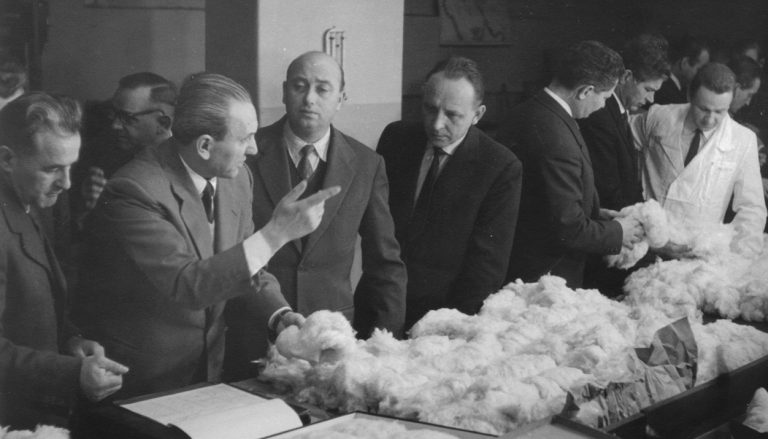
From the very beginning, the Association aimed to obtain the authority to conduct commercial and quality arbitration of American cotton, as this variety dominated European imports. Negotiations with the American Cotton Shippers Association (ACSA) were successful, and on 26 September 1938, together with the inauguration of the Association’s headquarters — the Cotton House — cotton arbitration in Gdynia was officially launched.
Thus, the first arbitration court in Poland was established. The creation of a Polish arbitration institution echoed widely across Europe. Gdynia became a significant centre for cotton trade and the largest cotton port on the Baltic Sea, competing with the established cotton exchanges of Bremen, Le Havre, and Liverpool.
During World War II, the Association’s activities were interrupted. The Cotton House building was seized and converted into a German military infectious disease hospital and later on into the financial office of the Kriegsmarine. It was classified by the Allied Forces as a military facility and it was destroyed in 75% during the 1944 bombings of the Port of Gdynia.
After the war, the GCA’s operations were reactivated, and upon rebuilding its headquarters, in 1948 the organisation resumed representing the interests of the textile sector.
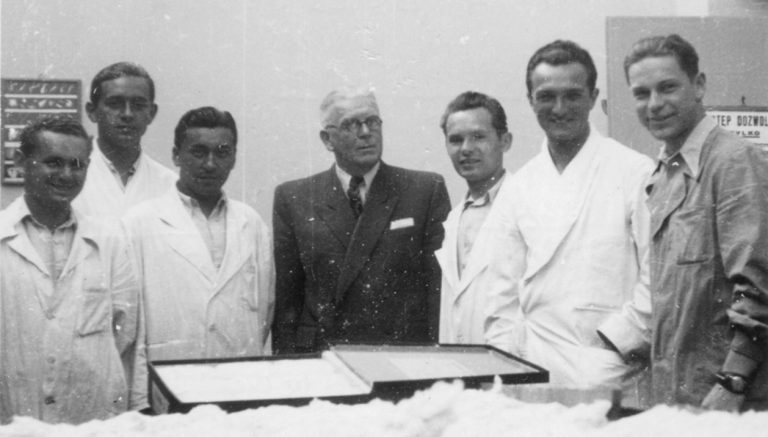
With the confirmation of the rights to carry arbitration, on 18 April 1947, the organisation’s Polish name was changed to the Cotton Arbitration Chamber in Gdynia, and later on — by a resolution of the General Assembly on 23 May 1975 — shortened to the Gdynia Cotton Association. The original English name: “The Gdynia Cotton Association” has remained unchanged until the present.
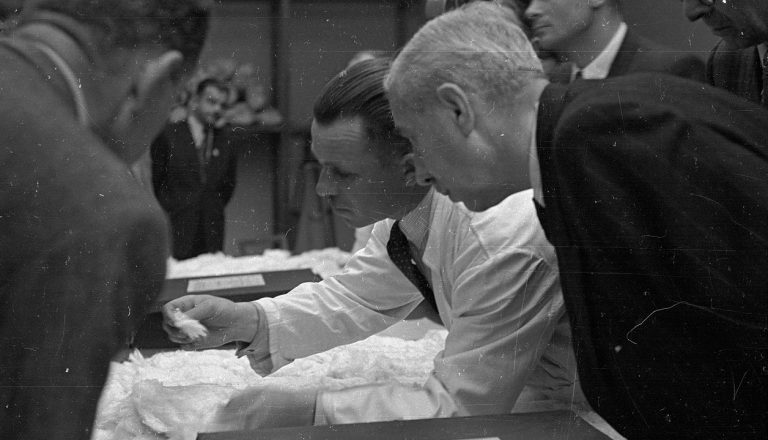
In recognition of the high standards of arbitration and training offered by the Association, in 1958 the American Cotton Shippers Association (ACSA) and the U.S. Department of Agriculture (USDA) designated the Association as a signatory of the Universal Cotton Standards Agreement for American cotton — a reference system used globally for arbitration involving practically all cotton varieties that do not establish their own national standards.
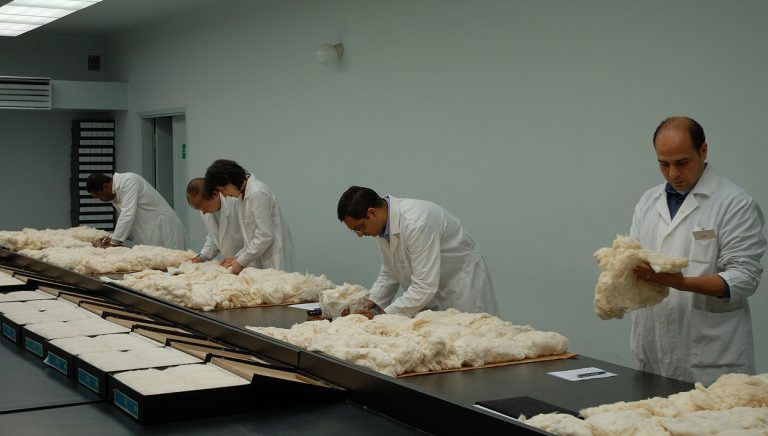
Following geopolitical changes after World War II, cotton imports shifted towards the Soviet Union, creating a need for testing the quality of cotton from that region. At the same time, the 1950s marked the beginning of instrumental testing of American cotton. In response to these developments, the Association established a cotton quality testing laboratory, which, in 1965, obtained accreditation for performing micronaire testing under arbitration procedures.
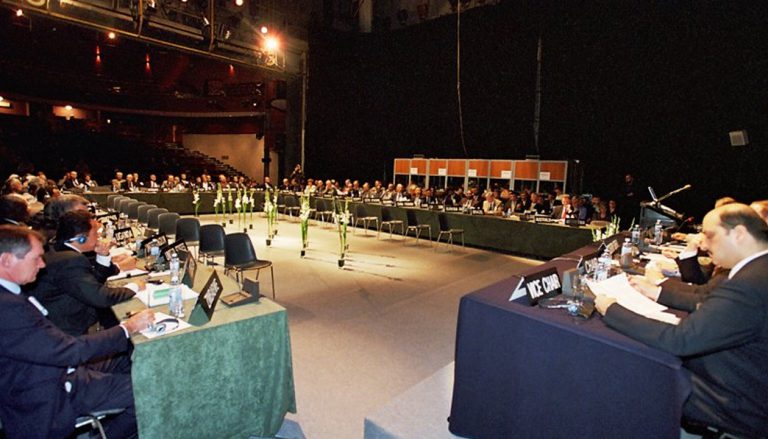
The Gdynia Cotton Association is now a respected arbitration institution, safeguarding the Association members’ interests in cotton trade, and actively cooperating with international organisations, including:
- International Cotton Association (ICA) – Liverpool
- American Cotton Shippers Association (ACSA)
- Bremen Cotton Exchange (BBB)
- Committee for International Cooperation between Cotton Associations (CICCA)
- International Cotton Advisory Committee (ICAC)
- EUROCOTON – Committee of the Cotton & Allied Textile Industries of the EU.
Representatives of the Gdynia Cotton Association have long been involved in governance and working groups of these organisations.
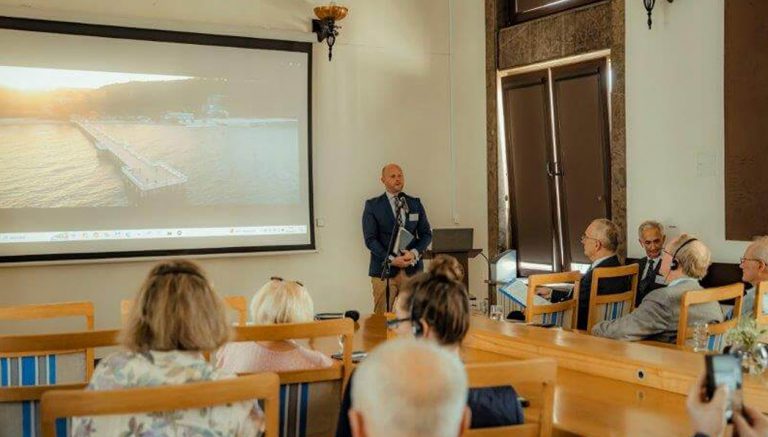
In Poland, the Association participates in legislative and advisory processes at both, regional and national levels, contributing expertise on technical, technological, commercial, and legal matters related to cotton trade. The Association promotes principles of sanctity of contracts, responsible business practices, sustainability throughout the cotton supply chain, and awareness of cotton as a natural, human-friendly fibre.
In 2023, the Association celebrated the 85th anniversary of the Arbitration Court — the oldest arbitration court in Poland.
In June 2025, the Gdynia Cotton Association celebrated the 90th anniversary of its founding and its continuous service to the international cotton sector and the Polish textile industry.
GCA MILESTONES
- 1934 Establishing of the Organising Committee of the Gdynia Cotton Association
- 1935 Founding of the Gdynia Cotton Association
- 1936 Endorsing of the Statutes, session of the 1st General Assembly
- 1938 Opening of the Cotton House and commencing the arbitrations
- 1939 Suspending the activity, due to the outbreak of WW II
- 1945 Decision about restoring of the Association and about reconstruction of the Cotton House bombed during the Allies' air raid
- 1947 Change of the Polish name of the Association
- 1948 Re-opening of the Cotton House and commencing cotton classification courses
- 1949 The first quality arbitration after the war
- 1952 The first commercial arbitration
- 1958 Accepting the GCA as the signatory of the Universal Cotton Standards Conference
- 1963 Commencing of the laboratory testing of cotton
- 1965 Recognising the GCA Laboratory by the American Cotton Shippers' Association
- 1968 Commencing the testing of cotton according to GOST standards
- 1969 Development of the Cotton House
- 1973 Change of the Polish name of the Association
- 1978 Accepting the GCA as the member of the Committee for International Co-operation between Cotton Association
- 1988 The 1st International Cotton Conference
- 1991 Accepting Poland as the member of the International Cotton Advisory Committee
- 1992 Commencing of the HVI cotton tests
- 1996 Graduation of the 500th student of the cotton classification courses
- 1997 Receiving the accreditation certificate by the GCA Laboratory
- 1997 Granting of the first licence for using the GCA Pure Cotton Emblem
- 1998 GCA accessing the European Cotton Confederation
- 2000 GCA accessing the International Forum for Cotton Promotion as the founder-member
- 2003 Organisation of the 62nd ICAC session in Poland
- 2004 Jubilee – 75th cotton classification course
- 2005 Membership in Eurocoton
- 2005 Celebration of the GCA 70th Anniversary
- 2005 The 3rd World Meeting of the GCA Cotton Experts
- 2005 Adoption of the Rules and By-laws of the European Cotton Associations
- 2007 Commencement of licensing in Poland the International Cotton Emblem – by virtue of the agreement with The Bremen Cotton Exchange
- 2008 Conference-Debate on the textile industry Gdynia Cotton Association - Eurocoton, with the participation of the European Commission representatives
- 2009 Celebrations of the International Year of Natural Fibres 2009 - Conference and the Fashion Show
- 2010 Celebrations of the GCA 75th Anniversary
- 2015 Celebrations of the GCA 80th Anniversary
- 2018 2018-2020 Realisation of the CELPREG Project (with NCR&D subsidy)
- 2022 Organization of the 14th International Conference CLOTECH 2022
- 2023 Celebrations of the 85th Anniversary of Establishing the Court of Arbitration at the Gdynia Cotton Association
- 2025 Celebrations of the GCA 90th Anniversary
History
The Cotton House in Gdynia
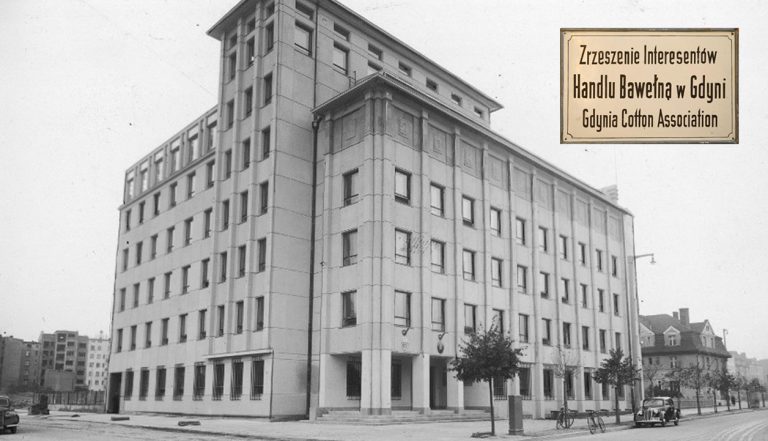
The specialised nature of the GCA activities and the need to launch an international cotton arbitration centre, combined with the Board’s strategic foresight to secure financial stability through rental income from its own office building, led to the decision to build the Cotton House.
In August 1937, the Association purchased from the Treasury a plot at the intersection of Derdowskiego and Żeromskiego streets — located on the border of the port zone and the city centre. Following the agreement with the Ministry of Industry and Trade and the Ministry of Finance, construction began on 20 September 1937, with completion scheduled no later than the end of September 1938.
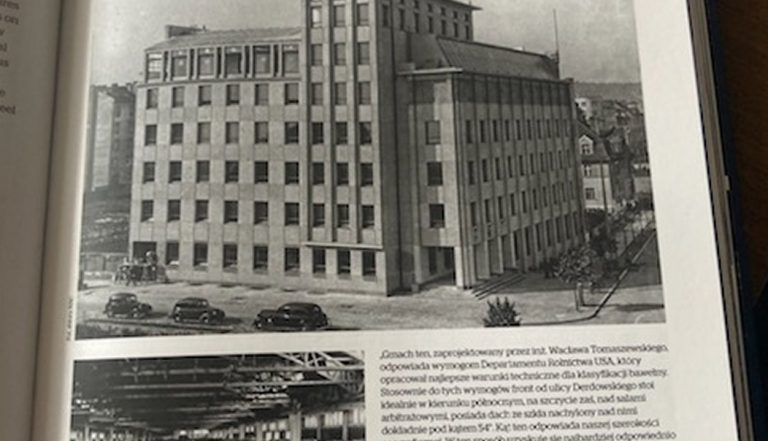
The design, prepared by Wacław Tomaszewski – a renowned Gdynia architect, envisioned a six-storey building with a basement. The 4th floor housed arbitration rooms, designed with specific natural-light parameters developed by the distinguished Polish astronomer Professor Tadeusz Banachiewicz (Jagiellonian University).
The 5th floor contained conference rooms and the offices of the Board of Directors and cotton classers. The 6th floor included a cafeteria serving over 150 employees of companies renting offices in the building.
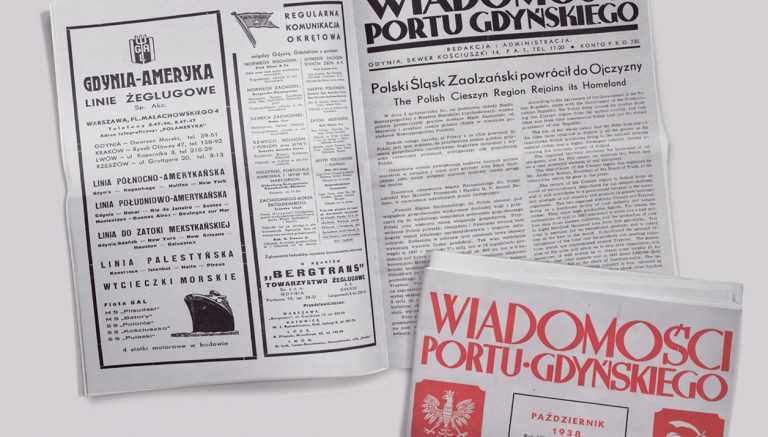
The importance of this economic project is demonstrated by the involvement of the Polish government and personal interest of the Deputy Prime Minister Eugeniusz Kwiatkowski. Minutes of the Board meetings record statements such as:
“The Ministry spares no effort to direct cotton imports through Gdynia. These efforts must culminate in the launch of cotton arbitration. The Ministry will not abandon this goal and considers the matter urgent. Construction should begin without delay to take advantage of the weather conditions favourable for building works.”
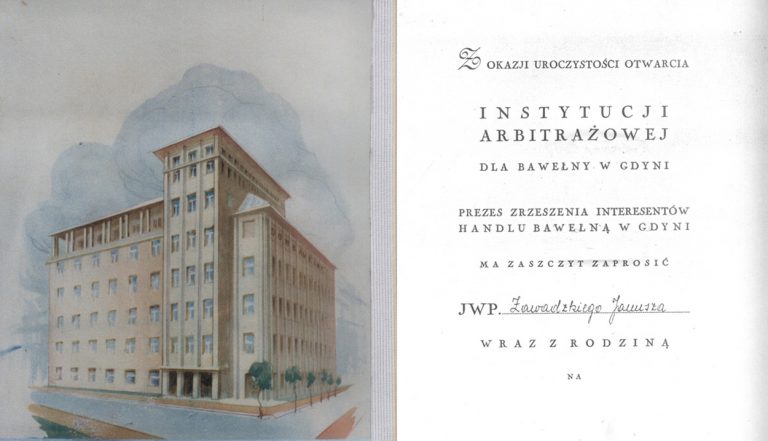
The official inauguration of the Cotton House and the Arbitration Institution took place on 26–27 September 1938. Guests were representatives of central and local authorities, the diplomatic corps, Polish and foreign members of the cotton world, as well as of banks, brokerage houses, forwarding agents, and inspection companies.
The programme featured a tour of the port of Gdynia, the consecration of the Cotton House, the official opening of arbitration, a luncheon, a reception aboard M/S Piłsudski, and a gala ball at the State Maritime School.
The printed invitation stated:
“Due to the presence of numerous international guests, the Organising Committee kindly requests timely arrival. Dress code: formal evening attire — white tie and decorations.”
History
City of Gdynia
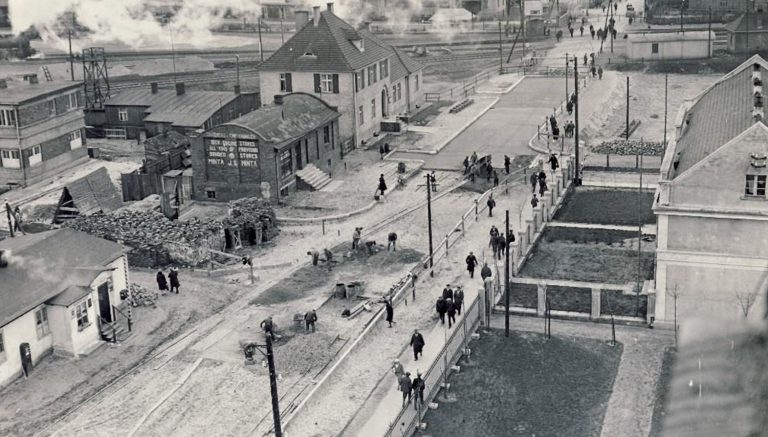
In 1921, Poland conducted the first national census in Gdynia, reporting 1,268 inhabitants.
Five years later, upon receiving municipal rights, the town grew to 12,000 residents.
Just before World War II, Gdynia was home to 127,000 people.